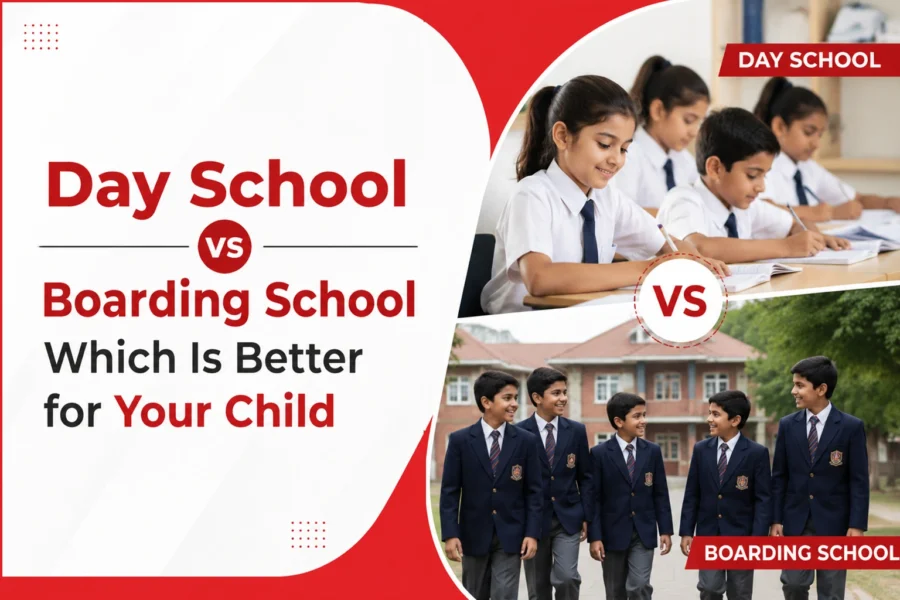
Choosing the right school is one of the most important decisions for any parent, as it directly impacts a child’s academic growth, personality development, and future success. When comparing day school vs boarding school, many parents struggle to understand the key differences, benefits, and long-term impact of each option.
While day schools offer family support and emotional stability, boarding schools focus on discipline, independence, and structured living. According to education experts, the right choice depends on a child’s learning style, personality, and developmental needs.
In this guide, we will explain the difference between day school and boarding school, along with their advantage and suitability, so you can make an informed and confident decision for your child’s future.
Before deciding which option is better, you need to have a clear idea of what each type of school actually provides. While both seek to deliver good education, their organization, surroundings, and day-to-day life differ significantly.
Day school is a school in which students are enrolled full-time for daytime hours and go home at the end of the day, as opposed to boarding schools, which have students living on campus. It is a system of education that is highly preferred in India and worldwide, especially by parents who wish to have their children raised in a family-oriented environment.
A day school keeps its students on a schedule, allowing them to study under the tutelage of skilled educators, play athletics, engage in co-curricular pursuits, and return home at the end of the day instead of living on campus. This method of education fosters close emotional ties between children and parents, children gain social skills, and children have a sense of comfort and security at home.
A boarding school is a type of school where students live on campus until they advance their Grade levels in studies. Boarding schools offer academic education as well as lodging and board to students, and generally include arrangements of meals, supervision of students, and a structured daily routine, unlike traditional day schools.
In the culture of a boarding school, students abide by a regimented daily schedule that extends from classroom to extracurricular activity to study hours to recreation to time for oneself, and it all takes place on school grounds. This regimented way of life teaches the students to possess valuable characteristics like self-discipline, self-reliance, accountability, and time management.
The main difference between day schools and boarding schools lies in their daily structure and lifestyle.
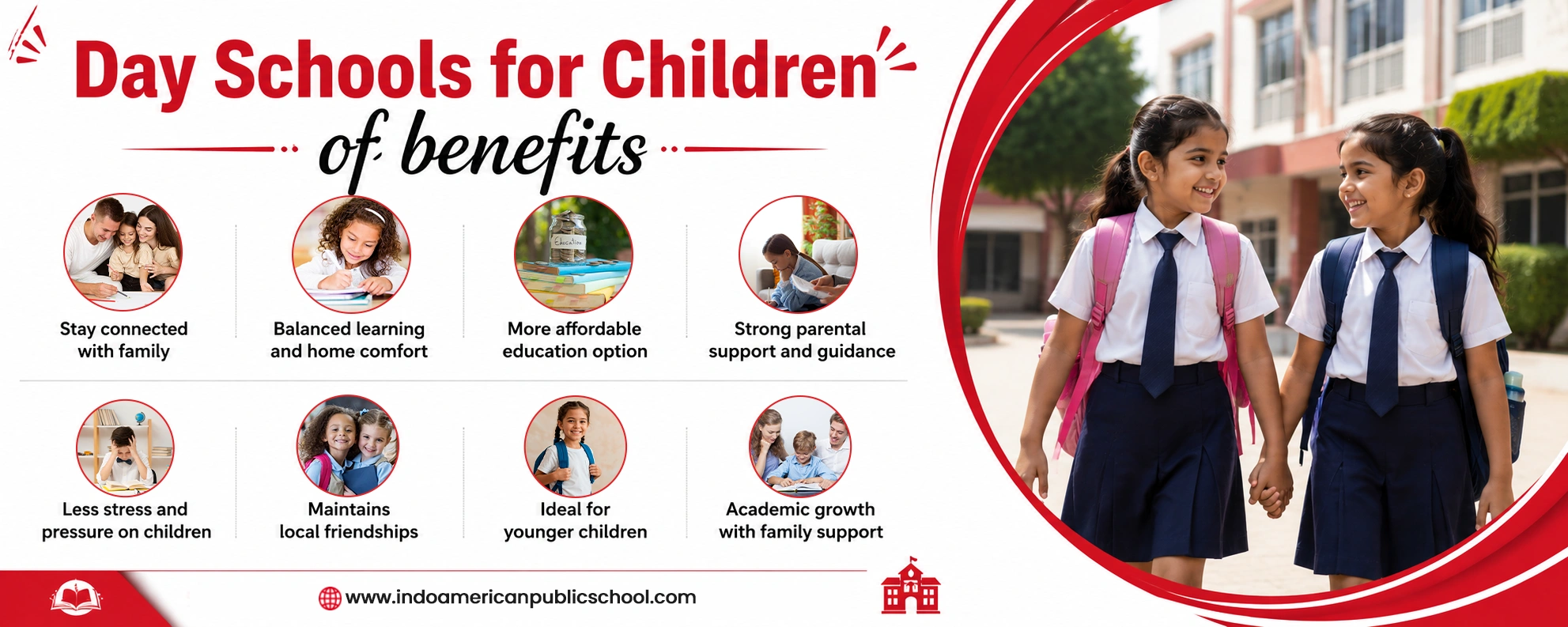
Day schools continue to be the first choice for most families in India, and with good reason. They offer a balanced mix of education, comfort, and emotional stability, which is important in the early years of a child’s life.
Boarding schools provide a unique experience compared to day schools, a controlled, immersive environment that seeks to influence both academic and personal development.
At this point, it’s obvious that both options have their pros and cons. The real question isn’t “Which system is better overall?” but rather “Which system best suits the personality and needs of your child and the situation of your family?”
| Factor | Day School | Boarding School |
|---|---|---|
| Living Environment | At home with family | Residential campus |
| Emotional Support | High (family support) | Moderate (peer & staff support) |
| Discipline | Depends on home environment | Highly structured |
| Independence | Develops gradually | Develops early |
| Cost | More affordable | Higher due to facilities |
| Best For | Younger children, family-oriented kids | Mature children, independent learners |
The choice between day school and boarding school is just one simple fact: every child is different. What works for one child is not necessarily right for another. The right choice is always the one that enhances your child’s emotional well-being, academic growth, and personality development.
A day school may be perfect if your child does best in a loving, home-based environment. But if they are eager to discover independence, discipline, and a regimented way of life, a boarding school can unlock opportunities for life-changing development.
If you are a parent looking for a balanced option that offers good academics, overall development, and is environmentally friendly, then Indo American Public School (IAPS) appears to be the most reliable option. Among the best schools in Udaipur, the school has established its name with a cohesive CBSE result, a flourishing campus culture, and a futuristic curriculum to fit well in the competitive world of today.