Have you seen how your kid remembers the play scripts in class without forgetting anything – but forgets the chapters of the textbook by the next day?
That is not a coincidence. That is the power of learning together.
Collaborative activities have been around in learning systems for decades now. But nowadays, modern schools such as Indo American Public School (IAPS) of Udaipur are making this process of collaborative learning far more effective and engaging – by designing group activities which help the learners learn better.
In this blog post, we will find out how these activities can benefit learners, and why this should be a must-have practice in all the schools that your kids attend. Let’s get started.
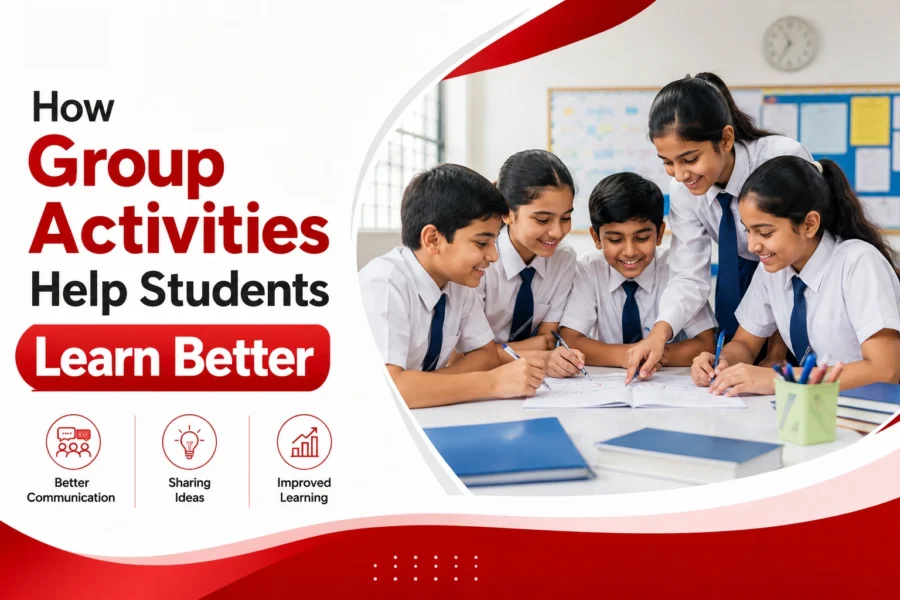
Group activities are any learning tasks where students work together in teams — instead of sitting alone and studying. This could be a science project, a classroom debate, a drama performance, a quiz competition, a sports event, or even a simple group discussion about a chapter.
The idea is simple — when children learn with each other, they understand more, remember more, and enjoy the process a lot more too.
The National Education Policy (NEP) 2020 encourages experiential, activity-based and collaborative learning to help students develop critical thinking, communication and other 21st-century skills.
When a student explains something to a classmate, they understand it better themselves. This is called the “learning by teaching” method – and it is one of the most powerful learning techniques in education.
In a classroom group activity, one child explaining a science concept to another child in simple words does more for both of them than reading the same chapter five times alone.
At IAPS Udaipur, teachers regularly use group discussions and peer learning sessions so students can understand CBSE concepts more deeply – not just memorise them for exams.
Many Indian students are brilliant – but struggle to express themselves confidently. Group activities fix this naturally.
When a child presents a project in front of their group, debates a topic in class, or performs in a school play, they are building communication skills without even realising it.
These are valuable skills for real life. not just for board exams, but also for college, future careers and everyday communication.
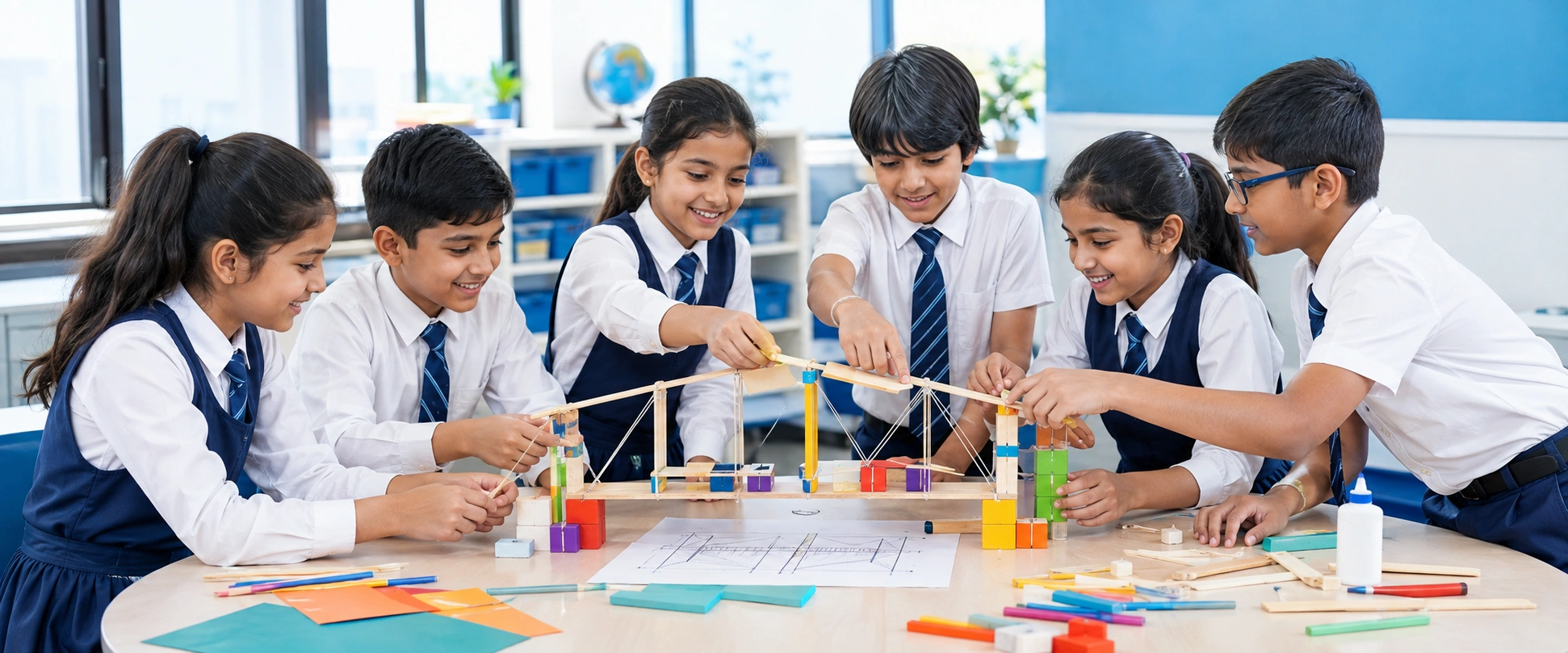
In real life – whether in a corporate office or a startup – almost everything happens in teams. Schools that teach children to work together from an early age give them a massive advantage later.
Group activities teach students how to divide work fairly, respect different opinions, handle disagreements calmly, and celebrate shared success. These are life lessons that no textbook chapter can teach on its own.
Every classroom has a few students who are extremely intelligent – but too shy to speak up. Group activities can be particularly helpful for these children.
In a small group of 4 or 5 students, a shy child feels much more comfortable sharing ideas than in front of the entire class. Slowly, their confidence grows. Their voice gets stronger. And before you know it – that quiet child is raising their hand in full class discussions too.
With regular opportunities to participate, students can gradually become more comfortable expressing themselves, and parents may notice this positive change during PTMs.
When a child is part of a group project, they understand that their performance affects the entire team. This sense of responsibility is a powerful motivator.
A student who might delay a solo assignment will work harder when they know their teammates are counting on them. Group activities naturally build a sense of accountability that carries into every area of a student’s life.
Collaborative and peer-learning activities can help students develop critical thinking, responsibility and other important learning skills.
Let us be honest. Sitting alone and reading a textbook for hours is boring – for most children.
But working on a group science model, acting in a school play, competing in a quiz with friends, or planning a classroom event together? That is exciting. That is something children look forward to.
When learning is fun, children are naturally more engaged. They pay more attention. They remember more. And they actually want to come to school.
This is exactly why schools that invest in co-curricular group activities see better academic results alongside better student happiness.
Group activities often involve challenges – a problem to solve, a debate to win, a project to complete within a deadline. When students tackle these challenges together, they learn to think critically, analyse situations, and come up with creative solutions.
These are the exact skills that CBSE’s NEP 2020 framework focuses on – moving away from rote memorisation and towards real thinking ability.
At IAPS, activity-based and concept-driven learning is built into the daily curriculum from KG to Class 12 — because we believe real education goes far beyond what is written in textbooks.
If you are looking for a school for your child in Udaipur, here are some important questions to ask –
At Indo American Public School (IAPS), Udaipur – the answer to all these questions is yes.
With smart digital classrooms, dedicated activity rooms, NCC programs, sports grounds, cultural events, and a teaching philosophy built around concept learning and student participation – IAPS gives every child the environment they need to truly grow.
Group activities are not a distraction from studies. They are a powerful part of education itself. Children who learn together develop better communication, stronger confidence, deeper understanding, and a genuine love for learning. These are qualities that shape not just good students – but great human beings.
We have seen this happen right here at Indo American Public School. A child who could barely speak in class in Grade 3 becomes a confident speaker by Grade 7. A student who struggled with science concepts finally understands them through a group experiment in the lab. That is the real power of group learning. And that is what we believe every child in Udaipur deserves.
Want to give your child this kind of learning environment? Visit Indo American Public School, Balicha, Udaipur Today!