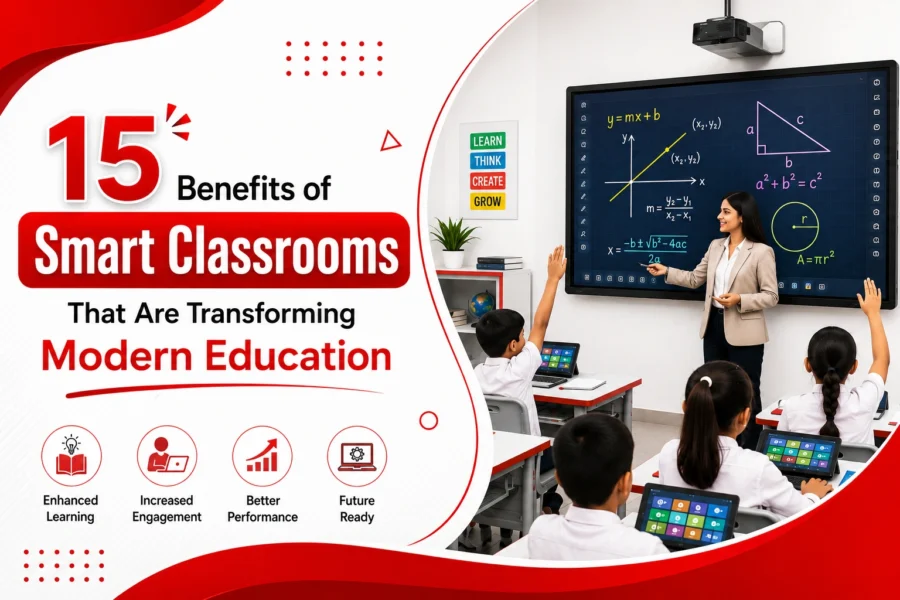
Technology and the implementation of AI is advancing every day, making improvements and innovations in education to become inclusive than ever. Gone are the days of desks, blackboards, textbooks, and lecture-style teaching. What was previously thought of as a modern classroom is now outdated. Smart boards, videos, animations, online assessments, educational applications, and digital interactive media are all included in today’s learning environments.
Current education systems have further engaged students by allowing them to learn through Smart Classrooms. Standing in front of students and teaching through lecture is no longer an acceptable way to ensure students are learning. Students can watch demonstrations and utilize digital media to learn. They can even engage by answering quizzes, participating in classroom simulations, and joining discussions.
In this blog, we will examine the ways in which technology is impacting education, explore the benefits of Smart Classrooms, and look at the rationale behind the adoption of digital classrooms in Indian schools to ensure improved educational outcomes.
A big advantage of smart classrooms is encouraging interactive learning. Participating doesn’t just mean that students are listening. Smart classrooms allow students to engage through quizzes, videos, polls, group tasks, and even through activities that are conducted using the smart board.
Interactive learning activities keep students interested and focused in lessons. This is even more important for primary school-aged students, who have a much shorter concentration span.
For example: a teacher using 3D model to explain human body and maps and satellite images of rivers and mountains to explain geography. Thus, interactive sessions are a more fun and inclusive way of teaching.
Student engagement is a major challenge in traditional classrooms. When lessons are too theoretical, students may feel bored or distracted. Smart classroom technology helps solve this problem by adding visuals, movement, sound, and activities.
Digital classrooms can use:
These tools make students curious and help them connect better with the topic. Better engagement often leads to better understanding and improved classroom participation.
Some topics are difficult to explain only through words or textbook diagrams. Smart classrooms help teachers explain complex topics through visual and practical examples.
This is useful for subjects like:
For example, students can understand the solar system better through animation than through a static textbook image. A math teacher can explain geometry using digital shapes and step-by-step visual tools. Smart classroom technology makes teaching easier and learning clearer.
Every student learns differently. Some students understand better through visuals, some through listening, some through reading, and some through activities. Smart classrooms support multiple learning styles in one lesson.
A smart class can include:
This makes the classroom more inclusive. Students who struggle with traditional teaching may understand better when the same topic is explained through digital content.
Smart classrooms enable a type of learning that tailors to the individual. This addresses the fact that in standard classrooms, the same lesson is delivered to every student at the same pace and students are expected to keep up and absorb the information the same.
Smart classrooms indicate:
In addition, digital assessments and learning platforms allow teachers to assign practice work, review work, and additional resources to students based on their need.
Also Read: How to Choose the Right CBSE School in Udaipur for Your Child
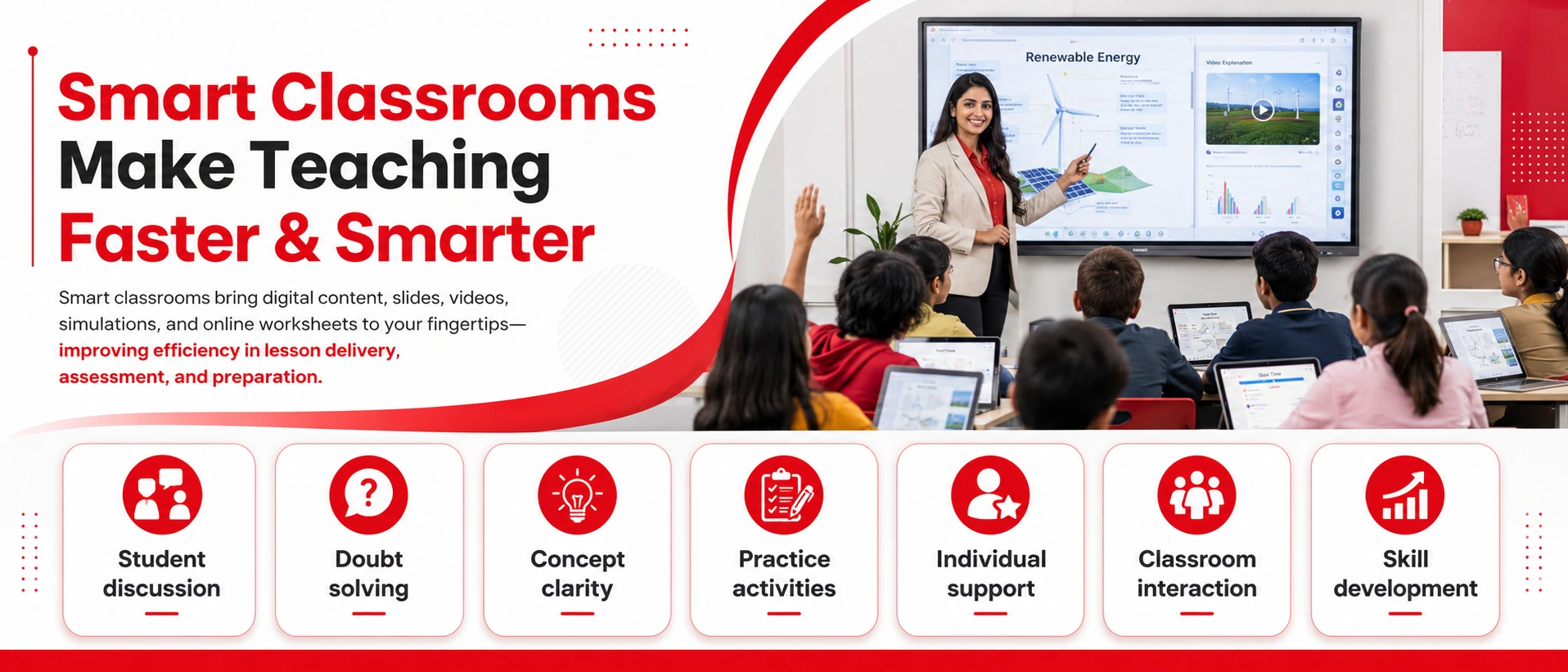
Smart classrooms improve efficiency in lesson delivery, assessment, and preparation. The digital content, slides, videos, simulations, and online worksheets that teachers used to write on the board are readily available.
This allows teachers to spend more time on:
Digital tools also make it easier to store lesson plans, reuse content, share notes, and track student progress.
Smart classroom technology helps teachers track student learning more effectively. Online quizzes, digital assignments, and learning management systems can show how students are performing.
Teachers can track:
This data helps teachers take timely action. Instead of waiting until final exams, teachers can identify weak areas early and support students better.
Digital literacy is now an important life skill. Students need to understand how to use technology safely, responsibly, and productively. Smart classrooms help students become comfortable with digital tools from an early age.
Students learn how to:
This prepares students for higher education, career opportunities, and modern workplace expectations.
Also Read: 10 Must-Have Facilities in a Good School in Udaipur
Smart classrooms connect textbook concepts with real-world examples. This helps students understand why they are learning a topic and how it applies in daily life.
For example:
Practical learning improves understanding because students can see how concepts work in real situations.
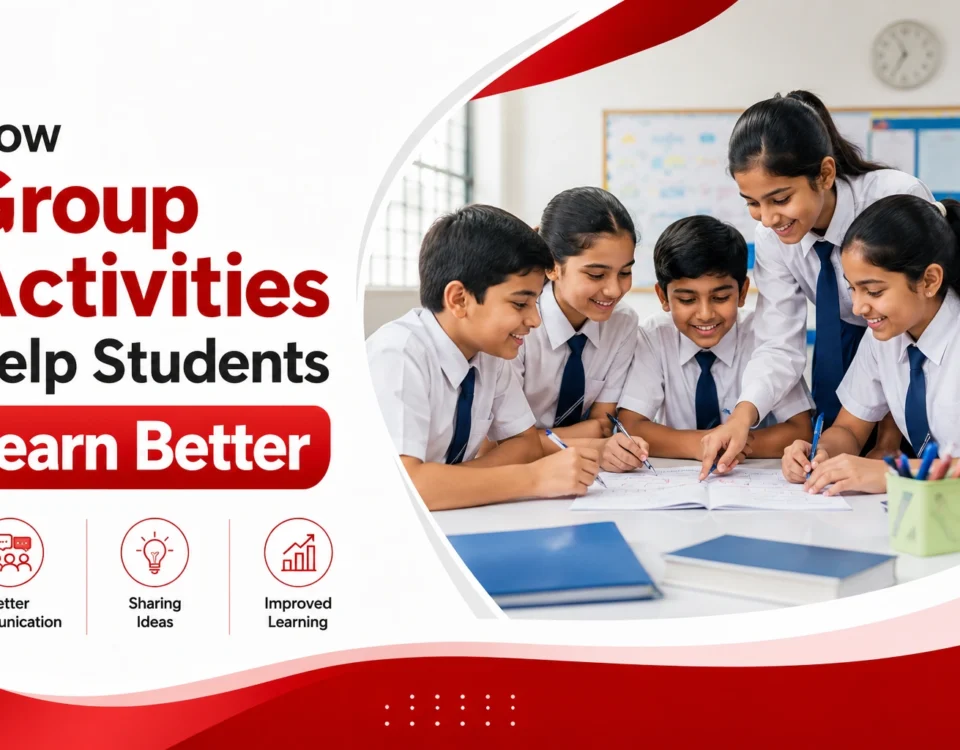
Smart classrooms encourage collaborative learning. Students can work together on group projects, digital presentations, classroom quizzes, and problem-solving activities.
Collaboration helps students develop:
A smart classroom is not only about screens. It is about creating a more active learning environment where students learn with teachers and classmates.
Smart classroom tools can support better classroom management. Teachers can organize lessons, display instructions, use timers, conduct quick assessments, and keep students focused through structured digital activities.
This is helpful because students are more likely to stay attentive when lessons are well-planned and visually engaging.
Smart tools can help manage:
When used properly, technology can make the classroom more organized and productive.
Smart classrooms can support inclusive education by helping students with different learning needs. Digital content can be repeated, paused, enlarged, translated, or supported with audio and visuals.
This can help:
Inclusive smart classroom design should also consider accessibility, screen visibility, sound clarity, and teacher support.
Smart classrooms help teachers work more efficiently. Teachers can prepare digital lesson plans, use ready educational resources, conduct online assessments, and share study material easily.
This improves productivity because teachers can reduce repetitive tasks and focus more on teaching quality.
Technology helps teachers with:
However, teachers still remain the most important part of the classroom. Technology should support teachers, not replace them.
Digital learning combined with classroom instruction is called blended learning. An example of blended learning is utilizing a smart classroom, since students can learn in Plenary and do further independent study at home using online resources.
Blended learning consists of:
This model helps students revise at their own pace and gives teachers more flexibility in teaching.
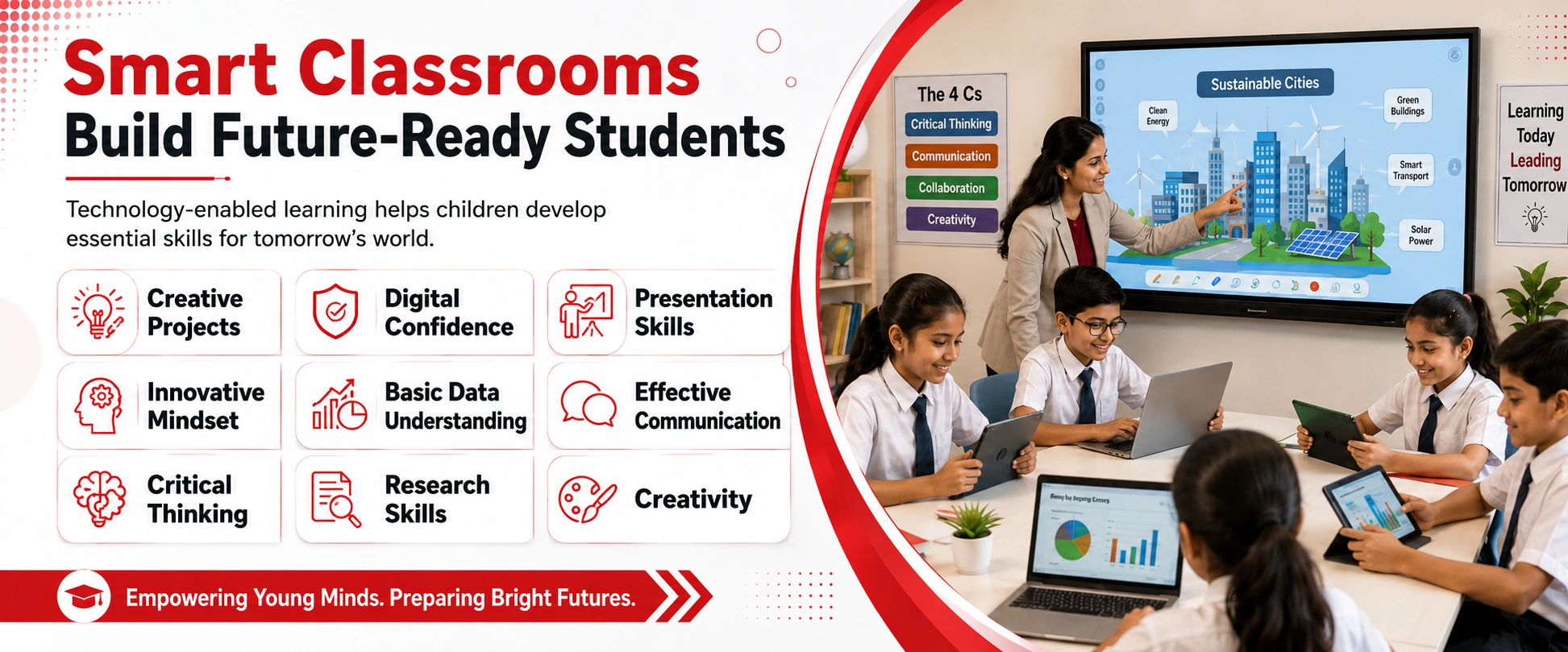
The workplaces of the future will demand that employees be equipped with various skills and traits: digitization, adaptability, creativity, problem-solving, and communication skills. Smart classrooms from the earlier stages of development can help children build these skills.
Tech-based learning may include:
Traditional classrooms mainly depend on textbooks, blackboards, notebooks, and teacher lectures. Smart classrooms add digital tools, visual content, interactive lessons, and real-time assessments.
Smart classrooms offer:
However, traditional teaching values like discipline, teacher guidance, reading, writing, and classroom discussion are still important. The best model combines strong teaching with useful technology.