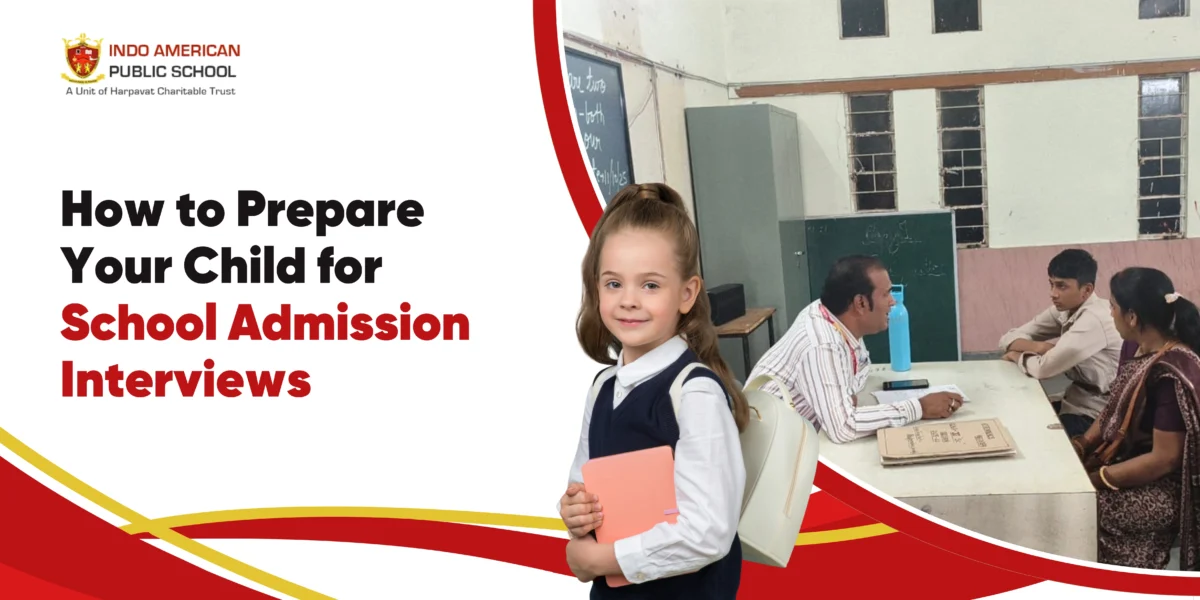
Preparing your child for school admission interviews can be a stressful experience for your child. Along with the child, parents are equally stressed about the interview process and the result afterward.
In many cases, school interviews are children’s first formal interaction after informal schooling at playschool and home settings. There is huge performing pressure associated with them to do well, and this itself can trigger anxious behaviour in children.
The good news is that school admission interviews are not about testing a child’s intelligence. Schools primarily look for a child’s basic communication skills, confidence, curiosity, social behavior, and readiness to learn. With the right approach and preparation, you can help your child feel comfortable, confident, and happy on the day of the interview.
This comprehensive guide will provide you with a clear understanding of how to prepare your child for school admission interviews in an effective manner, covering all the key dos and don’ts.
Before preparing your child for a school admission interview, it is important to understand the mindset of the school administration behind conducting such an interview.
Admission interviews are not competitive exams. They are designed to understand your child’s personality and development stage. Choosing the right school is just as important as preparing for the admission interview. Parents should understand factors like teaching approach, curriculum, values, and overall environment before finalizing a school.
If you’re exploring options, this detailed guide on how to choose the right CBSE school for your child can help you make a confident and informed decision.
Preparation should begin a few weeks before the interview, not a day before.
However, avoid over-preparing or drilling your child like an exam. Keep sessions short, playful, and stress-free.
Most school interviews involve simple questions.
| 1. | What is your name? |
| 2. | Tell us about your age / How old are you? |
| 3. | What do your parents do / What are your parents’ names? |
| 4. | Tell us about your favorite food / favorite color, animal, place, person, or toy |
| 5. | What all can you write / Can you identify basic shapes, fruits, or objects? |
| 6. | What are your favorite things to do? |
| 7. | Which is your favorite song? Can you sing a song? |
The goal is natural conversation, not perfect responses.
Role-playing is one of the most effective ways to prepare your child.
| How to role-play | Benefits of role-play |
| Act as the teacher or interviewer | Reduces fear of unknown situations |
| Ask simple, friendly questions | Makes interviews feel familiar |
| Praise effort, not correctness | Improves listening skills |
| Smile and maintain eye contact | Builds confidence in speaking |
Make role-play fun—use toys, puppets, or pretend classrooms.
Good manners make a strong impression during admission interviews.
Avoid scolding your child for mistakes. Gentle reminders and positive reinforcement work best.
Schools want to see whether a child can manage basic tasks independently.
These small abilities reflect readiness for a school environment.
Children often mirror their parents’ emotions. If you are anxious, your child will sense it.
Explain the interview as a friendly conversation, not an evaluation.
Too much information can confuse or overwhelm a child.
Remember, schools prefer natural behavior over rehearsed answers.
Many schools also interview parents.
Schools value cooperative parents, not perfect ones.
You can explore these essential facilities in a good school to understand what truly matters when selecting a school.
Learning through play is ideal before interviews.
These activities naturally enhance skills schools often look for.
Comfort plays a big role in your child’s confidence.
A comfortable child is a confident child.
A tired or hungry child may appear irritable or unresponsive.
A relaxed routine makes a big difference.
| Do’s | Dont’s |
| Arrive early | Prompt answers from behind |
| Stay calm and cheerful | Interrupt the interviewer |
| Encourage your child gently | Show frustration |
| Let your child answer independently | Compare your child to others |
Trust your child and the process.
Not every interview leads to admission—and that’s okay.
Every child develops at their own pace. A single interview does not define your child’s intelligence or future.
Rejection does not mean failure—it may simply mean the school was not the right fit at that time.
To conclude, preparing your child for a school admission interview is challenging only if you consider these simple interactive sessions between teacher and child as some competitive exam.
So the best parents can do is provide positive reinforcement along with confidence and emotional support so they can excel in this first exam of their academic journey.
At IAPS Udaipur, we view admission interviews as friendly conversations to discover your child’s natural curiosity. By prioritising emotional comfort and genuine communication over rote rehearsal, parents can transform this “first step” into a joyful milestone within our supportive learning sanctuary.
Copyright © 2013- 26 IAPS Udaipur. All Rights Reserved.